- Partners: PATH, BAO Systems and the DHIS2 Core team at the University of Oslo
- My role: led the integration, and designed the experience supervisors use in the field
- Shipped: DHIS2 Core v43 and Android Capture 3.4, released globally on 5 May 2026
- Recognition: PATH and BAO Systems were named finalists for the 2026 DHIS2 Contribution Award
The problem
Structured supervision never fitted neatly into a standard DHIS2 form. A supervision visit is scored, weighted, and has to leave the person supervised with something they can act on. Programs solved that by building around the platform: a custom app, maintained by whoever wrote it, pinned to a DHIS2 version, and at risk from the day the funding that paid for it ended.
I had seen that pattern from the inside. Earlier, at PSI, I designed and digitized more than 100 supportive supervision checklists into DHIS2 event programs across 12 country programs, and ran the global helpdesk for them. The checklists worked. What did not scale was every program carrying its own supervision software.
What I did
- Led the integration into core. I worked across PATH, BAO Systems and the DHIS2 Core team so that supervision became part of the platform rather than another app beside it.
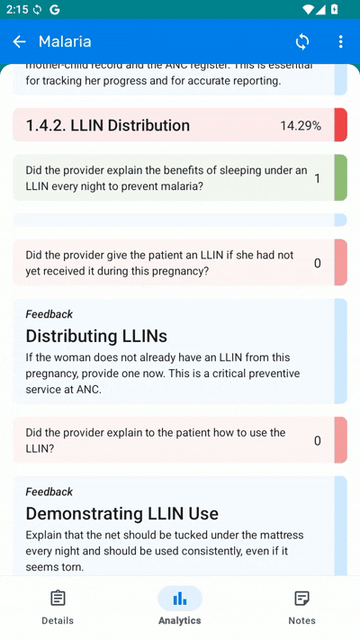
- Designed the frontline experience. Colour-coded scoring, because supervisors were turning numbers into judgements in their heads under time pressure. Markdown in feedback, because a wall of text does not get read by the person who has to act on it. Side-by-side key and value display, because that is how people read a checklist on a small screen.
- Kept it offline-first through Android Capture 3.4, because supervision happens where connectivity does not.
What changed
Structured supervision is now available to every DHIS2 user worldwide, with no custom supervision app to build or keep alive. Existing checklists remain event programs: the core feature reads them rather than replacing them.
The larger change is who holds the system. A custom app is a dependency on the organisation that wrote it. A core feature is maintained by the DHIS2 community, upgraded with the platform, and documented where a ministry can find it without asking a partner.
What I would tell the next program
Start from the supervision manual, not the software. The programs that struggled were rarely blocked by tooling; they had not agreed what a score means, who reviews it, or what happens when a facility scores badly twice in a row. Pilot with one region before a national rollout.
The configuration steps are in a separate piece: Supportive supervision is now part of DHIS2 Core.