- Organisation: PATH, REACH Malaria
- Period: 2024 to the present
- My role: I lead system administration, dashboard development, validation rules, metadata governance and the helpdesk procedures. Since April 2026, as Digital Health Lead, I also set technical direction for the portfolio’s digital health work.
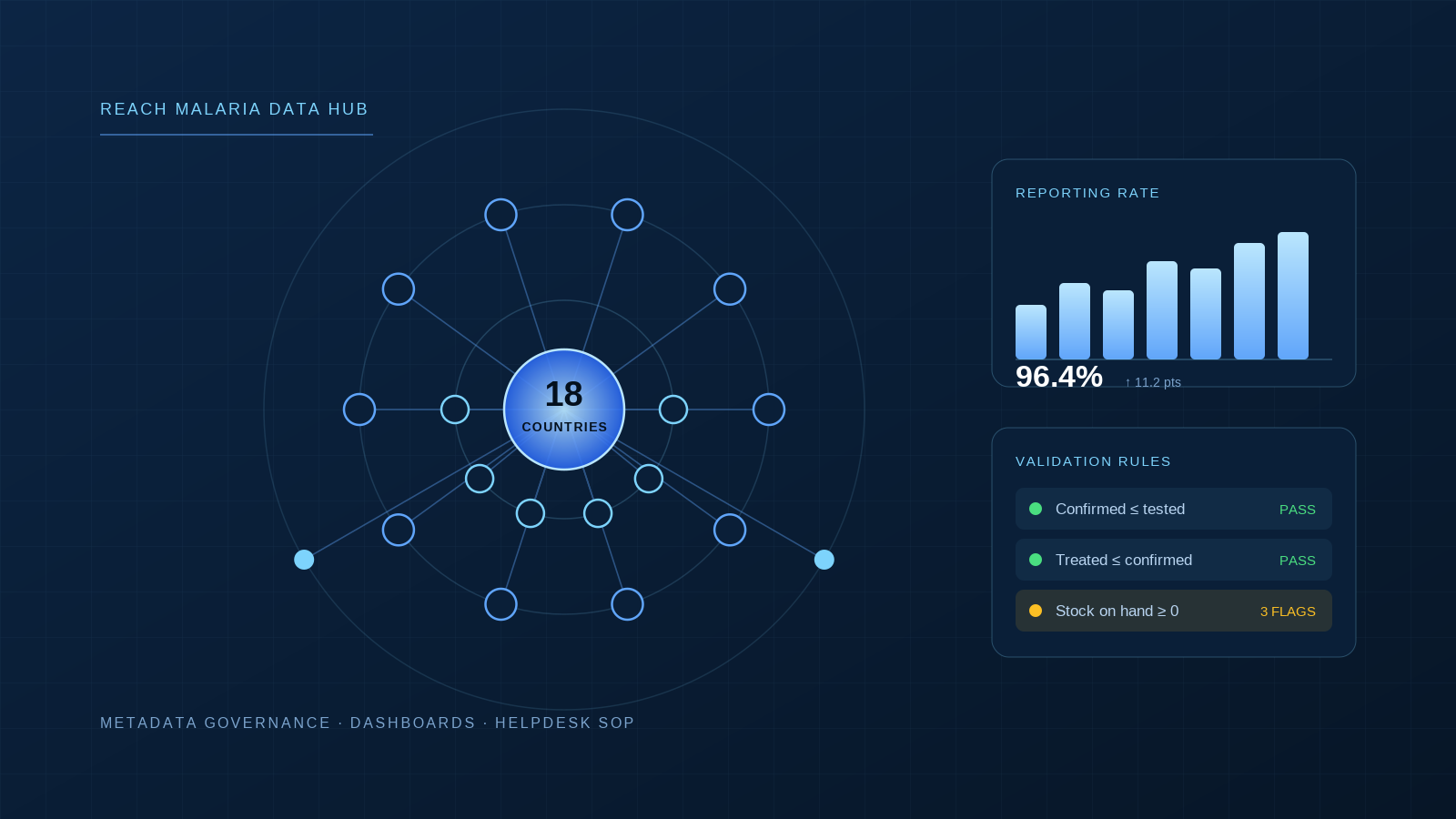
- Scale: one DHIS2 data hub serving a portfolio across 18 countries
The problem
A data hub that serves many countries fails slowly. Each country team has good reasons to add a data element, rename an indicator or build its own dashboard, and each change is harmless on its own. Together they produce a system nobody can read across: the same thing counted different ways, dashboards that disagree, and numbers that cannot be compared between countries without a spreadsheet and a phone call.
What I do
- Metadata governance: the rules for how metadata is created, named and changed, and who may change it, so the hub stays one system.
- Validation rules, so implausible values are caught close to where they are entered rather than in a report months later.
- Dashboards for the portfolio and for country teams.
- Helpdesk procedures: how questions and problems are raised, triaged and answered, so support does not depend on one person being awake in the right time zone.
- Training in English and French, and support for moving project-funded platforms into nationally owned health information systems.
Why it matters
The hub is the shared ground the REACH Malaria portfolio works from. Governance is what lets a number in one country mean the same thing as the same number in another, and what lets a new country join without rebuilding the system.
What I would tell the next team
Most data quality problems in a multi-country system are governance problems wearing a technical costume. Decide who owns each piece of metadata before you decide what it is called. Write the helpdesk procedure before you need it. And treat validation rules as a conversation with the people entering data: a rule nobody understands gets worked around.